

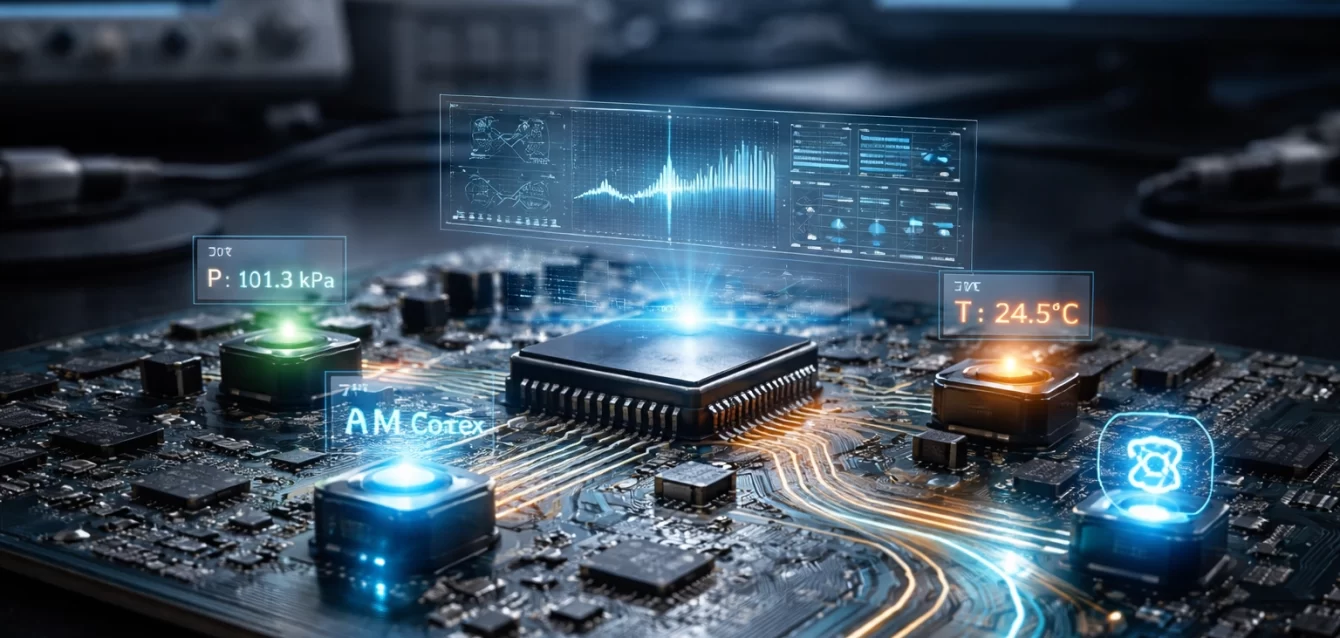
Modern electronics are no longer judged only by performance — they are judged by how intelligently they respond to real-world conditions. Smart sensors solve a critical problem: devices must sense, interpret, and act in real time without human intervention. This blog explains how smart sensors enable smarter outcomes, where they truly add value, and what engineers and decision-makers must consider before adopting them.
- Why traditional sensing approaches fall short today
- How smart sensors actually improve system outcomes
- Real engineering trade-offs and deployment realities
- When smart sensors create measurable advantages
- Practical guidance for implementation decisions
Why Traditional Electronics Struggle Without Smart Sensors
Many electronic systems still rely on raw data collection without intelligence at the edge. This creates delays, inefficiencies, and dependency on centralized processing.
- Sensors send data but cannot interpret context
- Systems react slowly due to cloud or processor dependency
- Increased power consumption from constant data transmission
- Limited adaptability to environmental changes
- Higher failure risks in dynamic operating conditions
Result: devices become reactive instead of intelligent.
What Makes a Sensor “Smart” — Beyond Measurement
A smart sensor is not defined by accuracy alone; it combines sensing, computation, and communication into one functional unit.
- Embedded microcontroller or signal processor
- Local data filtering and preprocessing
- Built-in calibration and compensation logic
- Edge decision capability before data transmission
- Connectivity via IoT or embedded communication protocols
Instead of sending raw signals, smart sensors deliver usable insights.
How Smart Sensors Deliver Smarter Results
The improvement comes from shifting intelligence closer to where data originates — the physical environment.
- Detect physical changes (temperature, motion, pressure, vibration)
- Process signals locally using algorithms
- Remove noise and irrelevant data
- Trigger actions instantly when thresholds are met
- Transmit only meaningful information
This reduces latency and enables systems to respond immediately.
Traditional Sensors vs Smart Sensors: Practical Comparison
Understanding the difference helps teams decide whether upgrading sensing architecture is justified.
Traditional Sensors
- Output raw analog signals
- Require external processing hardware
- Higher system complexity
- Slower response cycles
- Increased wiring and integration effort
Smart Sensors
- Output processed digital data
- Reduce processor workload
- Enable distributed intelligence
- Faster real-time response
- Simplified system architecture
The shift is less about hardware upgrades and more about system efficiency.
Where Smart Sensors Create Real-World Impact
Smart sensors matter most where conditions change rapidly or decisions must happen instantly.
- Industrial automation: predictive maintenance through vibration analysis
- Healthcare electronics: continuous monitoring with adaptive alerts
- Automotive systems: driver assistance and safety responses
- Consumer electronics: adaptive performance and energy optimization
- IoT infrastructure: autonomous environmental monitoring
In each case, intelligence at the sensing layer reduces operational risk.
Engineering Advantages That Improve System Outcomes
Smart sensors influence measurable performance metrics rather than abstract innovation goals.
- Reduced latency through edge processing
- Lower bandwidth requirements
- Improved system reliability
- Energy-efficient operation
- Faster anomaly detection
- Better scalability for connected devices
These benefits directly affect lifecycle cost and system stability.
Design Trade-Offs Engineers Must Consider
Smart sensors introduce advantages, but they also change design complexity.
- Higher unit cost compared to passive sensors
- Firmware updates become part of maintenance strategy
- Increased validation requirements
- Cybersecurity considerations at device level
- Power management challenges in battery systems
Ignoring these factors often leads to integration delays.
Why Edge Intelligence Matters More Than Cloud Processing
Sending all sensor data to centralized systems creates bottlenecks, especially in large deployments.
- Network latency delays decision-making
- Continuous transmission drains power
- Data overload increases processing costs
- Connectivity failures interrupt functionality
Smart sensors enable edge intelligence, allowing devices to operate independently when needed.
Common Implementation Mistakes
Many projects fail not because of technology limitations but because expectations are misaligned with system realities.
- Choosing sensors without defining decision logic
- Overprocessing simple sensing requirements
- Ignoring environmental calibration needs
- Underestimating firmware lifecycle management
- Treating smart sensors as plug-and-play components
Smart sensors require architectural planning, not simple replacement.
When Smart Sensors Deliver the Greatest ROI
Adoption makes the most sense when systems depend on responsiveness or operational efficiency.
- Systems requiring real-time automation
- Devices operating in remote environments
- Products needing predictive maintenance capabilities
- Applications with strict energy constraints
- Large-scale connected deployments
In static environments, simpler sensors may still be sufficient.
Limitations and Risks to Understand
Smart sensors are powerful but not universally necessary.
- Increased upfront engineering effort
- Debugging complexity across hardware and firmware layers
- Dependency on software reliability
- Integration challenges with legacy systems
- Certification considerations in regulated industries
Understanding limitations prevents overengineering.
Decision Guidance: Should You Use Smart Sensors?
The right decision depends on system goals rather than technology trends.
Good fit if:
- Real-time response improves outcomes
- Data volume needs reduction at source
- Automation reduces operational cost
- System intelligence is a competitive requirement
Not ideal if:
- Application requires simple monitoring only
- Budget constraints outweigh performance benefits
- Processing already occurs efficiently elsewhere
Technology adoption should solve a defined problem, not follow industry hype.
Future Direction: Where Smart Sensors Are Heading
The evolution of electronics increasingly moves toward distributed intelligence.
- AI-enabled sensing algorithms
- Self-calibrating sensor systems
- Ultra-low-power edge computing
- Sensor fusion for contextual awareness
- Autonomous device ecosystems
Electronics are shifting from programmed behavior toward adaptive operation.
Key Takeaways
- Smart sensors transform electronics from reactive to intelligent systems
- Edge processing improves speed, efficiency, and reliability
- Real value appears in dynamic or data-heavy environments
- Adoption requires architectural and firmware planning
- Trade-offs include cost, complexity, and lifecycle management
- Smart sensors are most effective when tied to clear operational outcomes
Closing Thought
As electronics move toward autonomy and real-time decision-making, intelligence is no longer centralized — it begins at the sensing layer. Organizations that understand how smart sensors reshape system architecture will design devices that are not just functional, but responsive, efficient, and future-ready.