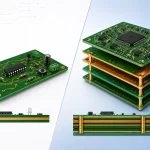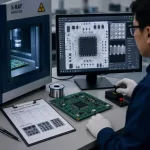



Hardware product development relies heavily on hardware design to turn innovative ideas into tangible, high-performing products. From smartphones and drones to medical devices and wearables, the success of any physical product often depends on how well its hardware is designed. A strong hardware design process ensures that products are not only functional but also reliable, manufacturable, and ready for the market.
In this article, you’ll learn about:
- Different types of hardware design and why they matter
- Key techniques and tools used in hardware design
- The step-by-step hardware design process
- Manufacturing considerations and optimization strategies
By understanding these aspects, you can elevate your product development efforts, reduce risks, and ensure your products meet customer expectations. Let’s dive into the world of hardware design and see how it drives successful product development.
1. Understanding Hardware Design
Hardware design is the foundation of any successful product. It involves creating detailed schematics, 3D models, and prototypes that guide the production of physical devices. The process ensures that each component is optimized for performance, reliability, and manufacturability.
Hardware design often begins with Computer-Aided Design (CAD) modeling, which enables engineers to visualize and refine ideas before committing to physical prototypes.
1.1 CAD Modeling in Hardware Design
Computer-Aided Design (CAD) is a critical tool in hardware design. It allows designers to build precise 3D models of physical components and systems. These models act as blueprints for the entire product development cycle.
Advantages of CAD Modeling:
- Enhanced Visualization: Provides realistic views of products, helping engineers assess design aesthetics and functionality.
- Improved Accuracy: Reduces errors with precise measurements and specifications.
- Streamlined Collaboration: CAD files can be shared among team members and stakeholders for feedback.
- Efficient Prototyping: Virtual testing identifies potential issues before physical prototypes are made, saving time and resources.
Popular CAD Software:
- SolidWorks: User-friendly and versatile for complex 3D modeling.
- AutoCAD: Supports both 2D and 3D design, widely used in engineering.
- CATIA: Preferred for aerospace and automotive projects with advanced surface modeling.
- PTC Creo: Offers parametric design capabilities and simulation tools for robust development.
“CAD modeling is like sculpting with digital clay; every adjustment shapes the success of the final product.”
1.2 Electronic Components in Hardware Design
Choosing the right electronic components is critical. Component selection impacts performance, reliability, and production cost.
Factors to Consider:
- Electrical Specifications: Voltage, current, power ratings, and other electrical properties.
- Physical Dimensions: Ensuring components fit within the product’s design constraints.
- Environmental Tolerance: Ability to withstand temperature, humidity, and other conditions.
- Availability and Cost: Components must be accessible and cost-effective for production.
Common Components:
- Resistors: Control current and adjust signals.
- Capacitors: Store and release energy, stabilize voltage, and filter signals.
- Microcontrollers: Act as the “brain” of electronic systems, processing inputs and controlling outputs.
Integrating these components effectively requires careful planning and CAD modeling to ensure both functional and aesthetic success.
2. The Hardware Design Process
Hardware design is not a single task; it’s a structured process involving multiple stages. Each stage builds on the previous one, reducing errors and improving product quality.
2.1 Requirement Analysis and Conceptualization
The first stage is requirement analysis, which defines the product’s objectives, constraints, and user expectations.
Key Steps:
- Requirement Gathering:
- Stakeholder Interviews: Understand the needs of clients and end-users.
- Market Research: Identify trends, gaps, and opportunities.
- Technical Specifications: Define performance, durability, and compliance requirements.
- Concept Generation:
- Brainstorming Sessions: Collaborate across teams to generate design ideas.
- Feasibility Studies: Evaluate practicality of concepts.
- Sketches and Diagrams: Visualize ideas through initial drafts.
Importance:
- Aligns design with user needs.
- Identifies potential risks early.
- Sets clear objectives for development.
Example: For a new wearable fitness tracker, requirement analysis may include user interviews about desired features, market research to identify gaps, and technical specifications like battery life, sensor accuracy, and durability.
2.2 Schematic Design and Simulation
After concept validation, engineers create circuit schematics to define how components interact.
Tools for Schematic Capture:
- Altium Designer
- Eagle
- KiCad
Simulation Tools:
- SPICE and LTSpice test hardware performance virtually before physical prototypes.
Iterating between schematic capture and simulation ensures potential issues are identified early, reducing costly mistakes during production.
2.3 PCB Layout Design
A Printed Circuit Board (PCB) is the backbone of most electronic devices. Proper PCB layout ensures signal integrity, thermal management, and manufacturability.
Key Considerations:
- Signal Integrity: Reduce noise and interference.
- Thermal Management: Prevent overheating in high-power devices.
- Manufacturability: Design for efficient assembly and soldering.
- Component Placement: Optimize performance while ensuring ease of assembly.
Iteration is essential: each revision improves performance, manufacturability, and reliability.
2.4 Prototyping and Testing
Prototyping transforms designs into physical models for testing.
Why Prototyping Matters:
- Confirms functionality and feasibility.
- Identifies design flaws early.
Testing Methods:
- Functional Testing: Ensures components perform as expected.
- Stress Testing: Evaluates performance under extreme conditions.
- Compatibility Testing: Confirms seamless integration with other systems.
- User Testing: Collects feedback on usability and performance.
Prototyping is iterative: each version improves design reliability and manufacturability.
2.5 Design Validation and Optimization
The final stage validates and refines the design before production.
Key Steps:
- Functional Testing: Verify real-world performance.
- Stress Testing: Ensure durability in extreme conditions.
- Compliance Testing: Meet industry regulations (CE, FCC, FDA, ISO).
Data from testing informs iterative improvements, optimizing performance and minimizing risks before mass production.
3. Manufacturing Processes for Hardware Design
Hardware design is closely linked to manufacturing strategy, which determines cost, scalability, and quality.
Key Considerations:
- Cost: Balance quality and budget.
- Scalability: Support prototypes and mass production.
- Quality Control: Maintain consistency across units.
Choosing the Right Process:
- Material Compatibility: Plastics suit injection molding; metals prefer CNC machining.
- Production Volume: Low volume → 3D printing; high volume → injection molding.
- Complexity of Design: Intricate designs may need laser cutting or precision casting.
- Lead Time: Rapid prototyping for fast testing; traditional methods for large-scale production.
- Durability & Performance: High-strength parts require forging or CNC machining.
By carefully evaluating these factors, hardware designers ensure functional, reliable, and cost-effective production.
Conclusion
Hardware design is the backbone of successful product development. Combining CAD modeling, thoughtful component selection, iterative testing, and optimized manufacturing creates innovative, reliable, and market-ready products.
Key Takeaways:
- CAD modeling enables precise, virtual design before production.
- Component selection ensures performance, cost-efficiency, and compatibility.
- Iterative design improves functionality, reliability, and user experience.
Emerging Trends:
- AI & Machine Learning: Streamline design, predict failures, and reduce costs.
- Nanoelectronics: Create smaller, more efficient devices.
- Sustainability: Green manufacturing is now a competitive advantage.
Learning and Exploration Tips:
- Adopt evolving methodologies and tools.
- Explore tutorials, courses, and forums.
- Collaborate and share insights with peers.
Hardware design is more than engineering—it’s creativity, problem-solving, and user-focused innovation. By embracing modern practices, companies can create smarter, sustainable solutions for today and tomorrow.