

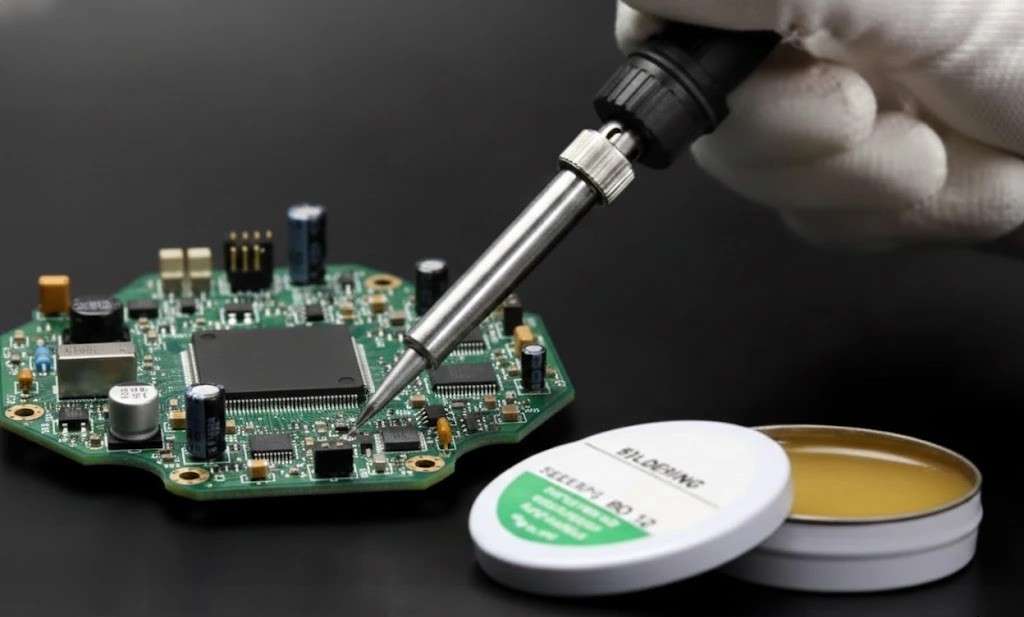
Choosing the right solder flux is one of the most important steps in achieving strong, reliable solder joints. Select your solder flux based on soldering method, PCB surface finish, component sensitivity, and cleaning requirements. This guide makes the selection process simple and clear.
Introduction
Most soldering issues—poor wetting, dull joints, or inconsistent connections—come from using the wrong solder flux. Whether you’re hand soldering, reflowing, or doing wave soldering, the right flux drastically improves reliability.
This blog explains what solder flux is, how it works, where it is used, and how to choose the correct type quickly and confidently.
In this guide you will learn:
- What solder flux is
- How it works during soldering
- Types, key terms, and components
- Real-life applications
- Benefits and challenges
- The exact steps to select the right flux
What Is Solder Flux?
Solder flux is a chemical agent used to clean metal surfaces and improve solder flow. It removes oxidation, protects the joint during heating, and helps solder bond strongly to pads and component leads.
Common solder flux types:
- Rosin flux
- Water-soluble flux
- No-clean flux
- Organic acid flux
- Low-residue flux
How Does Solder Flux Work?
Flux enables proper wetting and prevents oxidation, ensuring smooth, strong solder joints. It works in a sequence from cleaning to protecting to enhancing solder flow.
How flux performs during soldering:
- Removes oxide layers from metal surfaces
- Prevents re-oxidation during heating
- Helps molten solder spread evenly
- Improves joint strength and conductivity
- Leaves residue that may or may not need cleaning
Key Terms or Components Involved
Understanding core flux components helps you choose the correct type for your PCB and process. Each part affects performance and residue behavior.
Key components include:
- Activators: Determine how aggressive the cleaning action is
- Carriers: Hold activators (rosin, water, or solvent-based)
- Residue level: Low, medium, or high depending on flux type
- Cleaning requirement: Mandatory, optional, or not required
- Process compatibility: Suitable for hand solder, wave, or reflow
Real-Life Applications
Solder flux is used across industries where clean, reliable solder joints are essential. The type of flux varies depending on performance needs and cleaning capability.
Where solder flux is commonly used:
- Consumer electronics: No-clean flux for compact SMT boards
- Industrial electronics: Higher-reliability flux for harsh conditions
- Aerospace and defense: RMA flux for strong mechanical stability
- Prototyping: Rosin or gel flux for manual adjustments
- High-density SMT boards: Low-residue no-clean flux
Benefits and Challenges
Flux improves solder quality, reduces defects, and enhances manufacturing efficiency, but also introduces cleaning and compatibility considerations.
Benefits:
- Stronger, more reliable solder joints
- Improved wetting and solder flow
- Reduced rework and manufacturing defects
- Better performance in high-reliability boards
Challenges:
- Some fluxes leave corrosive residue
- Wrong flux can cause soldering failures
- Cleaning requirements add cost and time
- Not all fluxes match all PCB finishes
How to Select the Correct Solder Flux
Choosing solder flux becomes simple when you follow specific criteria: soldering method, PCB finish, environment, and cleaning capabilities.
Step-by-step selection guide:
- Identify soldering method:
- Hand solder → No-clean or rosin
- Reflow → Low-residue or no-clean
- Wave → Water-soluble or rosin
- Check component sensitivity:
- RF/analog ICs → Low-residue flux
- Power devices → Medium-activated flux
- Consider cleaning capabilities:
- No-clean when washing is not possible
- Water-soluble for high-reliability assemblies
- Match PCB surface finish:
- ENIG → No-clean
- HASL → Rosin or no-clean
- OSP → Water-soluble or no-clean
- Check environment & reliability requirements:
- Industrial/aerospace → RMA flux
- Consumer devices → No-clean
- Verify standards:
- IPC J-STD-004 compliance
- ROHS compatibility
Conclusion
Selecting the right solder flux becomes easy when you consider your soldering process, PCB material, and cleaning capability. The right choice improves solder wetting, reduces failures, and ensures long-term product performance. With a clear understanding of flux types and their applications, you can make smart decisions for both prototyping and production.